| The city of Toyama, 250 kilometers northwest of Tokyo, Japan, was worried about the "threat of extinction" in 2005. With the aging population, the urban population density was 40.3 people per hectare, the lowest among metropolitan and provincial governments in the country. Retail sales decreased by 40 percent from 10 years ago. Toyama City chose "Compact Machizukuri" (マチヅクリ, making a compact village). The transportation network was reorganized and shopping malls and amenities were concentrated within a minute from the station. They gathered living spaces that were divided into seven places. When the functions of the city center were combined, the city began to revitalize. Currently, Toyama City ranks seventh in real income per household out of 47 metropolitan and provincial governments in Japan. Korea is expected to enter a super-aged society with more than 20% of the population aged 65 or older at the end of this year. In order to prevent urban extinction crises such as low birth rate and population outflow, "Compact City" has recently emerged as an alternative in the real estate development industry. It aims to create a "sustainable city" like Toyama City by concentrating residential and commercial facilities in the center of the city. Japan, which has been aging ahead of Korea, is a large-scale complex development project that is undergoing renovation throughout the city. The Azabu Dai Hills in Minato-gu, Tokyo, which opened in November last year, is a good example. The old city center has been transformed into a complex with three skyscrapers, including the 330-meter-high Mori JP Tower (office). Shopping malls, hospitals, schools, and art galleries will be moved into the facilities where 1,400 households live, and "work, live, and play" will all be resolved within 10 minutes of walking. The Japanese government has established a "National Strategic Special Zone" system in 2014 that eliminated various regulations that hinder urban development to encourage compressed urban development. Azabu Dai Hills was designated as a special zone in 2017, and the floor area ratio increased from 350% to 990%. We can't forget the 'Tokyo Midtown YAES' building in the YAES district of Tokyo Station. The 45-story building contains not only business and commercial facilities, but also elementary schools, kindergartens, and bus terminals. On the 40th and 45th floors, there is a five-star hotel, the Bulgari Hotel. Other representative compact cities include "Hudson Yard" in New York, the United States, and "King's Cross" in London, the United Kingdom, which is famous as a filming location for the movie “Harry Potter.” 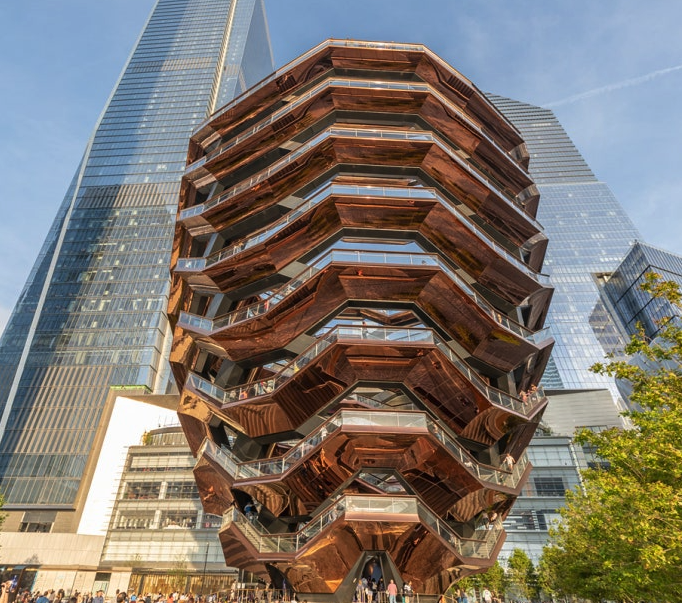
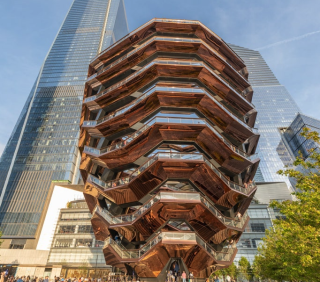
<Hudson Yard in the NewYork>
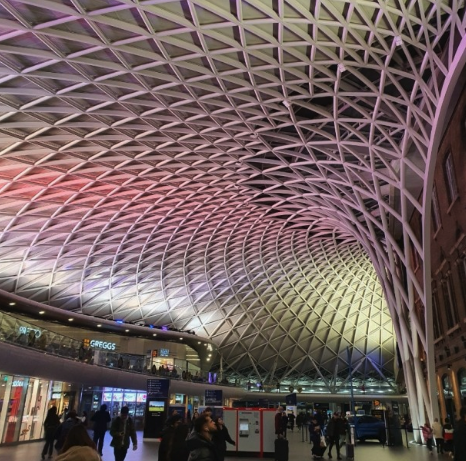
<King's Cross in London>
Unlike other countries, Korea has only recently started developing compact cities. The Land, Infrastructure and Transport Ministry selected and announced 16 candidates for the "Space Innovation Zone," the Korean version of the "compact city," last month. 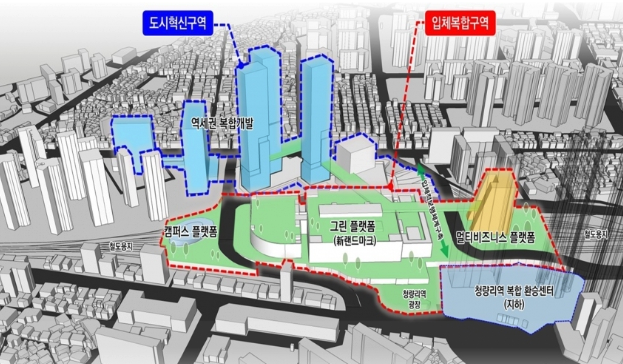
<Space Innovation Zone (공간혁신구역) in Korea>
The plan is to create a special area that is free from the permitted use of buildings on land and regulations on the building-to-land ratio and the area-to-use ratio, and allows convergence urban development. In Seoul, four places were selected as candidates, including Yangjae Station, Gimpo Airport Station, Cheongnyangni Station, and Doksan Air Force Unit. The region selected this time will be finally designated as a spatial innovation zone after the competent local government establishes a "space restructuring plan" containing detailed development plans and deliberations by the urban planning committee. Separately, the Seoul Metropolitan Government is pushing for a project to develop a Yongsan maintenance window site (500,000 square meters) called "Geumsaragi Land" as an international business district. The plan is to allow a floor area ratio of up to 1,700%, build buildings around 100 floors, and create the world's largest vertical city where business, residential, and leisure are all possible. Gyeonggi-do Province is promoting the development of a "Platform City" with complex functions such as high-tech industries, housing and culture in Mabuk-dong and Bojeong-dong, Yongin, led by local governments and the Gyeonggi Housing and Urban Innovation Corporation (GH), and is also developing an urban complex that combines startup complexes, start-up support housing and complex commercial spaces at Indeokwon in Anyang City.
Key Takeaways: Compact City Development
- Urban Extinction Threat: Aging populations and declining birth rates are leading to urban decline and "extinction" in some cities, exemplified by Toyama, Japan.
- Compact City Solution: The "Compact City" model concentrates residential, commercial, and civic functions within a small, walkable area, revitalizing urban centers and fostering sustainable development.
- Examples of Compact Cities:
- Toyama City, Japan: Revitalized through "Compact Machizukuri" initiative.
- Azabu Dai Hills, Tokyo: Mixed-use development with high-rise buildings and amenities.
- Tokyo Midtown YAES: Includes commercial, residential, and educational facilities.
- Hudson Yard, New York: Large-scale development featuring diverse functions.
- King's Cross, London: Famous for its mixed-use development and Harry Potter film location.
- Government Support: Japan and Korea are using special zones and deregulation to encourage compact city development.
- Korean Initiatives:
- "Space Innovation Zone" program: Designated areas with relaxed regulations to foster compact city development.
- "Geumsaragi Land" project in Yongsan, Seoul: Plans for a large-scale vertical city with a high floor area ratio.
- "Platform City" in Yongin, Gyeonggi-do: Focuses on high-tech industries, housing, and culture.
- Future Potential: Compact city development offers a solution to urban decline and fosters sustainable and vibrant city environments.
|